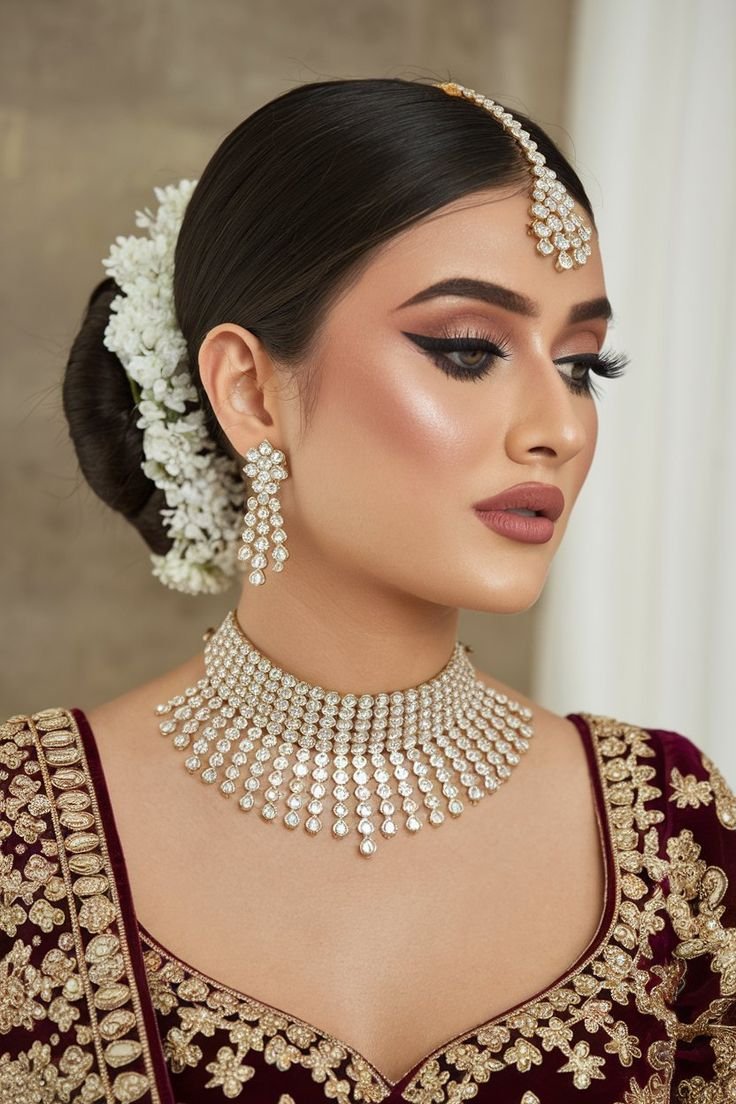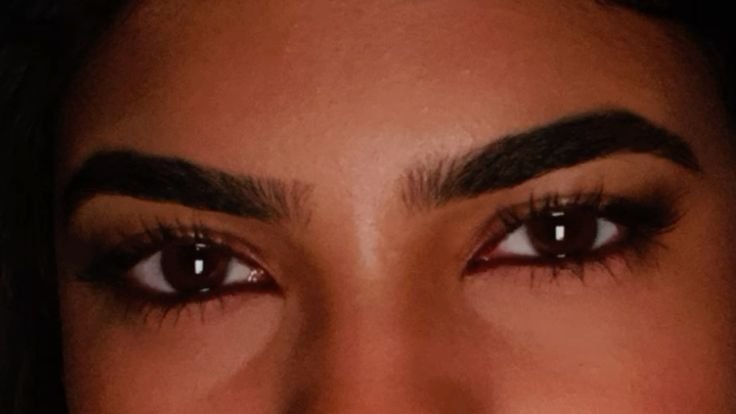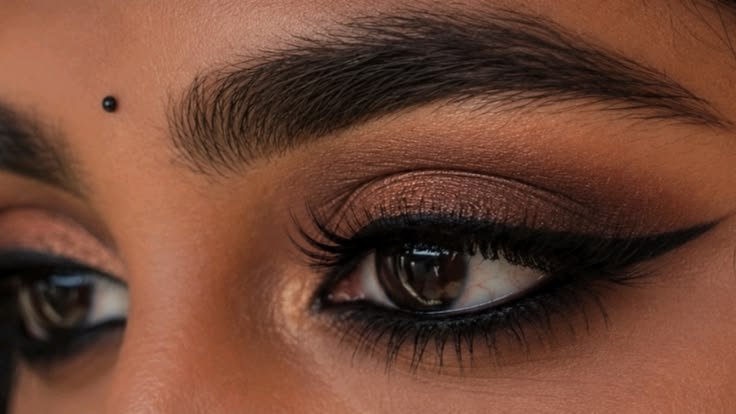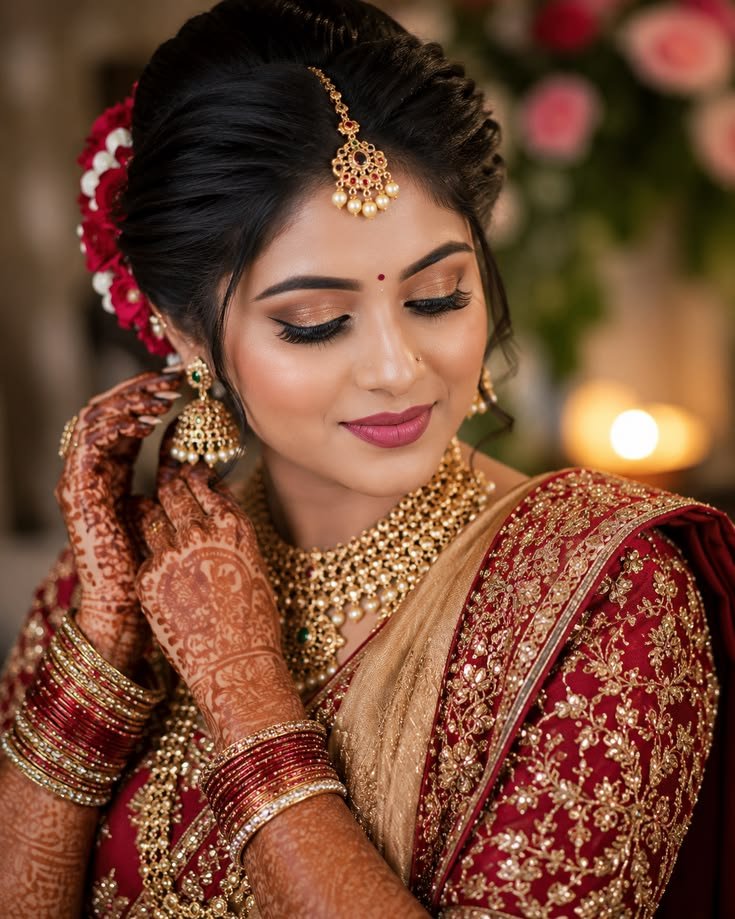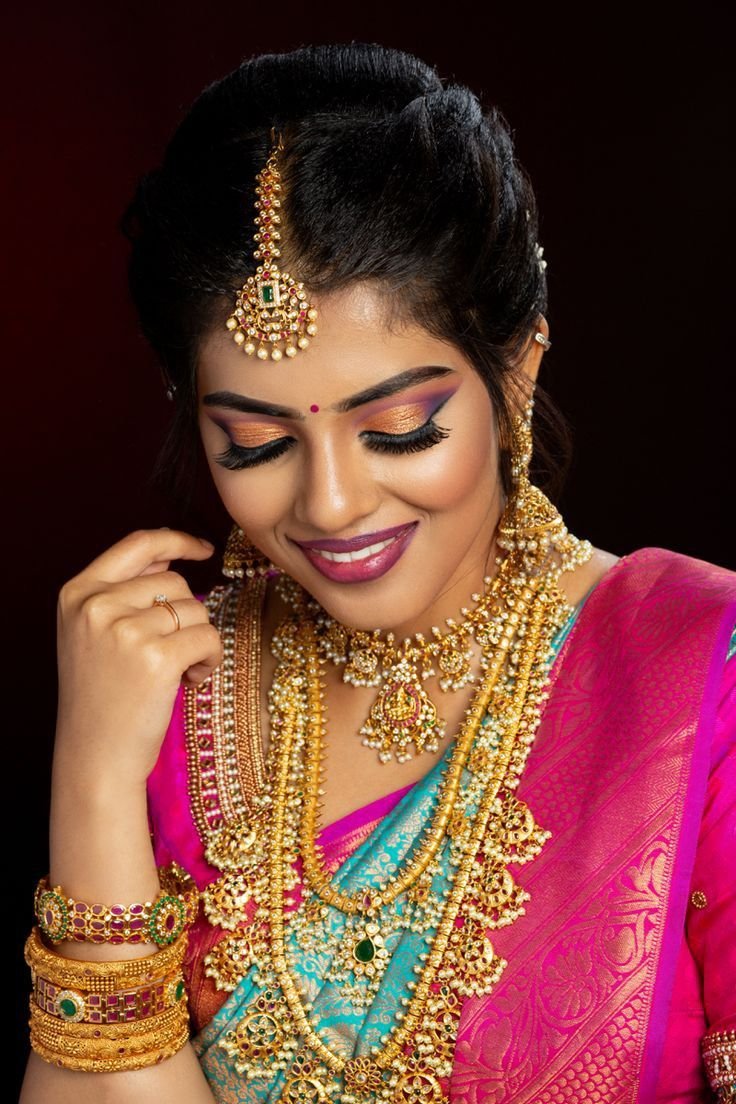
Choosing the right makeup style involves more than selecting lipstick or eyeshadow. It includes understanding skin preparation, foundation matching, eye makeup, contouring, highlighting and product selection. Professional application can help create a balanced finish that looks beautiful in person and photographs.
Whether a bride prefers a traditional Indian look, soft glam, dewy makeup or a bold contemporary style, the right approach should reflect her personality and make her feel comfortable and confident.
Popular Wedding Makeup Styles
1. Traditional Bridal Makeup
Traditional bridal makeup is a popular choice for weddings featuring cultural ceremonies and elaborate bridal attire. It often includes defined eyes, carefully blended foundation, coordinated lipstick and a finish that complements traditional jewellery.
The makeup can be customised to suit red, maroon, pink, gold or other bridal outfit colours. The aim is to create a harmonious look without making the features appear overly heavy.
2. HD Wedding Makeup
HD makeup generally uses products and application techniques designed to create a smooth, refined finish that looks natural under high-resolution photography.
Proper blending, accurate shade matching and controlled product application are important for avoiding visible lines or an overly thick appearance. HD makeup is not automatically suitable for every person; the best result depends on the products, technique and individual skin needs.
3. Airbrush Wedding Makeup
Airbrush makeup uses a specialised device to apply a fine mist of makeup, often creating a lightweight and even-looking finish. It may be suitable for brides who prefer a refined appearance with minimal visible product texture.
However, suitability depends on skin type, product formulation, environmental conditions and personal preference. A makeup trial can help determine whether airbrush application is the right choice.
4. Soft Glam Bridal Makeup
Soft glam combines polished skin, blended eyeshadow, subtle contouring and balanced lip colour. It is suitable for brides who want an elegant appearance without dramatic makeup.
Neutral shades, soft pinks, warm browns and understated highlights can be selected according to the bride’s complexion, outfit and desired style.
5. Dewy Bridal Makeup
Dewy makeup creates a fresh, luminous appearance. It often involves moisturised skin, carefully selected base products and controlled highlighting.
For oily or combination skin, strategic powder application can help manage shine while preserving luminosity. The goal is healthy-looking radiance rather than excessive oiliness.
6. Minimalist Wedding Makeup
Minimalist bridal makeup focuses on enhancing natural features with a lighter-looking base, subtle eye definition and a comfortable lip colour.
This style can work well for intimate ceremonies, daytime weddings, civil ceremonies or brides who prefer a simple and understated look.
How to Choose the Right Wedding Makeup
Selecting a bridal makeup style requires consideration of several factors.
Skin Type and Skin Preparation
Understanding whether the skin is dry, oily, combination or sensitive helps guide product selection. A suitable skincare routine can improve comfort and help makeup apply more evenly.
Avoid experimenting with unfamiliar active skincare products immediately before the wedding, as irritation or breakouts may occur. Brides with persistent skin concerns should consider consulting a qualified dermatologist.
Wedding Outfit and Jewellery
The makeup should complement the bridal outfit rather than compete with it. A richly embellished outfit may pair well with defined eyes or balanced lip colour, while a simple outfit may suit a softer makeup look.
Jewellery, hairstyle, neckline and accessories should also be considered when planning the overall appearance.
Wedding Venue and Lighting
Indoor ceremonies, outdoor functions and evening receptions have different lighting conditions. Makeup should be tested under lighting similar to the event wherever possible.
Photography can also influence product choices. Excessive shine, poorly blended contouring or a mismatched foundation shade may become more noticeable in photographs.
Personal Style and Comfort
A bride should feel like herself on her wedding day. Inspiration photographs can help communicate preferences, but the final look should account for facial features, skin characteristics and comfort.
A professional makeup artist should discuss the desired coverage, eye intensity, lip colour and overall finish before beginning the application.
Essential Steps in Professional Wedding Makeup
Step 1: Skin Preparation
The skin is gently cleansed and moisturised with products suitable for its needs. Primer may be applied to help create an appropriate base.
Skin preparation should be planned in advance, particularly for people prone to sensitivity or breakouts.
Step 2: Foundation and Concealer
Foundation is selected to match the complexion and provide the desired coverage. Concealer may be used to address specific areas requiring additional coverage.
Blending along the jawline and checking the shade in suitable lighting help create a more natural-looking result.
Step 3: Contouring and Highlighting
Contouring can add subtle definition, while highlighting draws attention to selected areas of the face. Both techniques should be adapted to the bride’s facial structure and preferred makeup intensity.
Step 4: Bridal Eye Makeup
Eye makeup may include eyeshadow, eyeliner, mascara and other suitable products. False lashes can be used when desired, provided the application is comfortable and appropriate.
The colour palette should complement the outfit and the overall bridal look.
Step 5: Eyebrows and Lip Makeup
Well-groomed eyebrows help frame the face. Lip colour is chosen according to the desired finish, outfit and overall makeup palette.
Lip preparation and a suitable lip product can help improve comfort and appearance throughout the event.
Step 6: Setting and Final Checks
Setting powder or setting spray may be used according to skin type and product compatibility. The makeup artist should check blending, foundation matching, flash photography appearance and overall balance before completing the look.
A small touch-up kit can help manage lipstick fading, perspiration or shine during the event.
Wedding Makeup Tips for Long-Lasting Results
A well-planned routine can help maintain the bridal look throughout the celebrations.
- Schedule a makeup trial before the wedding day.
- Share inspiration photographs with the makeup artist.
- Follow a consistent skincare routine in the weeks before the wedding.
- Avoid untested facials, peels or new skincare products immediately before the event.
- Choose foundation and concealer shades that match the complexion.
- Use waterproof products when appropriate for the ceremony and weather.
- Carry lipstick, tissues and blotting paper for touch-ups.
- Confirm the makeup schedule and allow sufficient time for dressing and photography.
- Communicate allergies, sensitivities and product preferences in advance.
- Check the finished look in natural and event-style lighting.
These steps help reduce last-minute uncertainty and allow the bride to focus on enjoying the celebration.
How to Choose a Professional Wedding Makeup Artist
Choosing a makeup artist is an important part of bridal planning. Review their portfolio to understand their style, blending techniques and experience with different bridal looks.
Ask about the products they use, hygiene practices, trial appointments, travel arrangements and the services included in the package. Confirm whether the package covers hairstyling, draping, eyelashes, touch-ups or makeup for family members.
Pricing should be understood clearly before booking. Brides should ask about advance payments, cancellation policies, timing and any additional travel or early-morning charges.
A consultation helps establish realistic expectations and gives both the bride and the artist an opportunity to discuss the desired look.
Wedding Makeup for Different Wedding Functions
Indian weddings often include multiple events, each with a distinct outfit and atmosphere.
Engagement Makeup: A polished look that complements the engagement outfit and works well in photographs.
Mehndi Makeup: A fresh, comfortable style that suits daytime celebrations and colourful clothing.
Haldi Makeup: A lightweight look that considers the outdoor setting and the possibility of turmeric or other substances coming into contact with the skin.
Wedding Ceremony Makeup: A coordinated bridal look that complements traditional attire, jewellery and the significance of the ceremony.
Reception Makeup: A more defined or glamorous look may be preferred for evening events, formal outfits and stage photography.
Each look can be adapted to the bride’s preferences, schedule and comfort.
Frequently Asked Questions About Wedding Makeup
What is the best Wedding Makeup style for a bride?
The best style depends on personal preference, skin type, outfit, lighting and the wedding ceremony. Traditional bridal makeup, HD makeup, airbrush makeup, soft glam and minimalist makeup are all options worth considering.
How early should I book a wedding makeup artist?
Booking several months in advance is a practical approach, particularly during busy wedding seasons. Availability varies by artist, location and wedding date.
Is a makeup trial necessary before the wedding?
A trial is highly recommended because it helps confirm the makeup style, product compatibility, shade matching and application preferences before the wedding day.
How can I make bridal makeup last longer?
Appropriate skin preparation, compatible products, careful setting and periodic touch-ups can help maintain the look. Weather, skin type, activity and product formulation also influence longevity.
Is HD makeup better than airbrush makeup?
Neither option is universally better. HD makeup may offer a refined finish through conventional application techniques, while airbrush makeup uses a specialised spray application. The suitable choice depends on skin needs, desired coverage and the makeup artist’s expertise.
Can wedding makeup be suitable for sensitive skin?
Yes, it may be possible to customise the products and application techniques. Brides should disclose known sensitivities, avoid unfamiliar products close to the event and consider professional medical advice for significant skin concerns.
Conclusion
Wedding Makeup brings together artistry, skin preparation, product knowledge and personal style to create a memorable bridal appearance. The most suitable look is one that complements the wedding outfit, photographs well and allows the bride to feel comfortable and confident.
Planning ahead, arranging a makeup trial and selecting a professional artist with appropriate experience can make the process smoother. With thoughtful preparation and a personalised approach, bridal makeup can enhance the overall wedding experience without compromising individual preferences.